Restaurants · Commercial kitchens · Food prep

Commercial kitchen floors in Newnan, GA

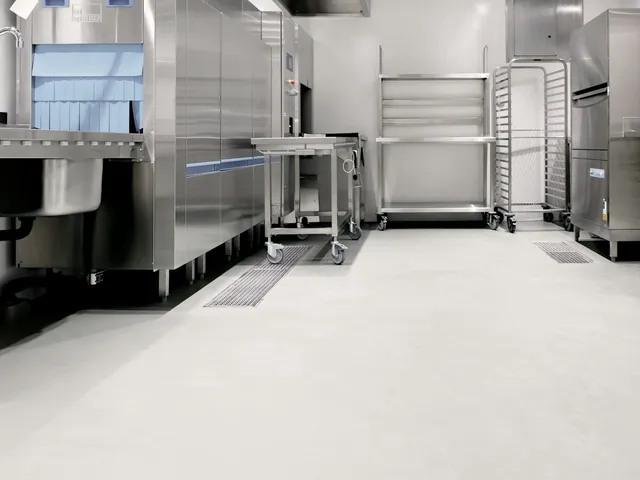
Heat-rated urethane cement flooring for restaurant kitchens, food prep rooms, dish stations and back-of-house areas, made for hot-water washdown, grease and constant wet traffic.

We take care of everything: the measured quote, scheduling and the final walkthrough with you.

Who it's for

For kitchens that run hot, wet and greasy

Restaurants, cafes, bakeries, caterers, and school, church and event center kitchens all put a floor through the same daily punishment: hot oil and grease, spilled food and drinks, hot-water and steam cleaning, and heavy, wet foot traffic for hours at a time.

Standard garage-style epoxy is not built for that. For commercial kitchens, Shinova Shine quotes a urethane cement system, a different, heat-rated floor made for food service conditions.

  • Restaurant and cafe kitchens
  • Food prep, bakery and catering spaces
  • Dish stations, walk-in areas and back-of-house halls
  • School, church and event center kitchens

Options

Why kitchen floors need a heat-rated system

Urethane cement is a cement-based polyurethane flooring. It goes down thicker than a typical epoxy coating and is formulated for the conditions a kitchen floor sees every day.

Heat

Heat and thermal shock

Fryers, ovens, hot pans and hot-water or steam cleaning expose the floor to heat and to fast swings in temperature. Standard epoxy can soften, discolor, crack or lift under that kind of repeated thermal shock. Urethane cement is designed to handle much higher temperatures and rapid changes.

Washdown

Hot-water washdown

Kitchens are mopped and hosed down with hot water every day, and water finds every seam. A seamless floor, often finished with a cove base where it meets the walls, leaves fewer places for water and grime to collect. Urethane cement is also generally more tolerant of moisture in the slab than standard epoxy.

Grease

Grease, fats and food acids

Animal fats, cooking oil, sugars, vinegar, citrus and cleaning chemicals break down many floor finishes and soak into bare concrete. Urethane cement is built to resist them, and a textured finish helps footing on a wet, greasy floor.

Prep & process

How a kitchen floor project works

  1. Site visit

    We look at the existing floor, drains, slopes, equipment and any failing tile or coating, and ask about your hours and closures.

  2. Written scope & schedule

    Your quote covers removal, prep, the urethane cement system, texture and cove base where needed, with a schedule built around your closures.

  3. Removal & prep

    Old coatings or damaged surfaces are removed and the concrete is prepared and repaired, with care around drains and transitions.

  4. Install & handover

    The urethane cement system is installed and textured. We walk it with you and confirm when the kitchen can reopen.

What to expect

What to expect for your kitchen

  • The kitchen needs to close. Equipment has to move and the floor needs time to cure before service starts again. How long depends on the size of the space, the prep and the conditions, so we plan around your slowest days or a planned closure.
  • Equipment and drains. Tell us what moves and what is fixed in place. Fixed equipment, floor drains and trench drains are planned in the scope.
  • Odor and ventilation. Some flooring systems have a noticeable odor during installation. We talk through ventilation and timing to keep the impact on your space and neighbors low.
  • Your requirements. Health departments and landlords may have their own rules for food service floors. Check yours and share them with us so the scope matches.

The honest part: a kitchen floor is only as good as the slab and the drains around it. If we find slope, drain or slab problems during the site visit, we will tell you up front and explain your options before anything is scheduled.

Local

Kitchen floors for Newnan-area restaurants and food businesses

From restaurants around the courthouse squares in Newnan and Fayetteville to cafes on Senoia's Main Street and kitchens along the busy roads through Peachtree City, Sharpsburg and Tyrone, food service floors here face the same things: Georgia heat, humidity and long, hot shifts.

We take kitchen floor requests across Coweta County and nearby Fayette County. Request a quote with the size of the kitchen and your best days to close, and we will plan from there.

FAQ

Commercial kitchen floor questions

Why not just use epoxy in a commercial kitchen?

Standard epoxy works well in garages and many commercial spaces, but kitchens add heat, thermal shock from hot-water and steam cleaning, and constant grease. Over time those conditions can make standard epoxy soften, discolor, crack or lift. Heat-rated urethane cement is built for them, which is why we quote it for kitchens.

What is urethane cement?

It is a cement-based polyurethane flooring system. It goes down thicker than a typical floor coating, cures into a dense, seamless surface and is formulated to handle heat, moisture, fats, oils and many food acids and cleaning chemicals.

Is a urethane cement floor slippery?

It is usually finished with texture for footing on wet, greasy floors. The amount of texture is a balance between grip and how easy the floor is to clean, and we talk through the right level for each area of your kitchen.

Can you install around our equipment and drains?

Yes. Equipment that can move is moved, and fixed equipment, floor drains and trench drains are worked around and detailed in the scope. Tell us what is fixed in place when you request a quote.

How long will the kitchen be closed?

It depends on the size of the kitchen, the removal and prep needed, and the conditions on install day. You get a realistic schedule with your written quote, planned around your slowest days or a planned closure.

Will the floor meet health department requirements?

Food service floors generally need to be smooth, durable, nonabsorbent and easy to clean, and urethane cement systems are designed with that in mind. Requirements vary, so check with your local health department and landlord and share any specific rules with us so the scope matches.

How do I get a quote?

Use the quote form or call 404-941-4475. Share the kitchen size, the current floor, where the drains are, what equipment is fixed in place and your best days to close. Photos help.

Ready for a kitchen floor built for the heat?